

For years, the UAE was the global standard for tax simplicity. You made profit; you kept it. That era ended on June 1, 2023.
Now, with a 9% Corporate Tax rate on profits exceeding AED 375,000, business owners are scrambling. The initial reaction I see from many clients is panic followed immediately by a request for “creative” accounting.
Let me be blunt: “Creative” accounting in the current regulatory environment is a one-way ticket to significant penalties. The Federal Tax Authority (FTA) has sophisticated auditing tools, and the old playbook of hiding income simply won’t work.
But here is the good news. You don’t need to break the law to lower your tax bill. The law itself provides robust, structured mechanisms to optimize your liability. It isn’t about evasion; it’s about strategic efficiency. Here is how you can legally reduce your UAE business’s tax liability, without losing sleep over an audit.
Leveraging Small Business Relief (SBR) for Tax Efficiency
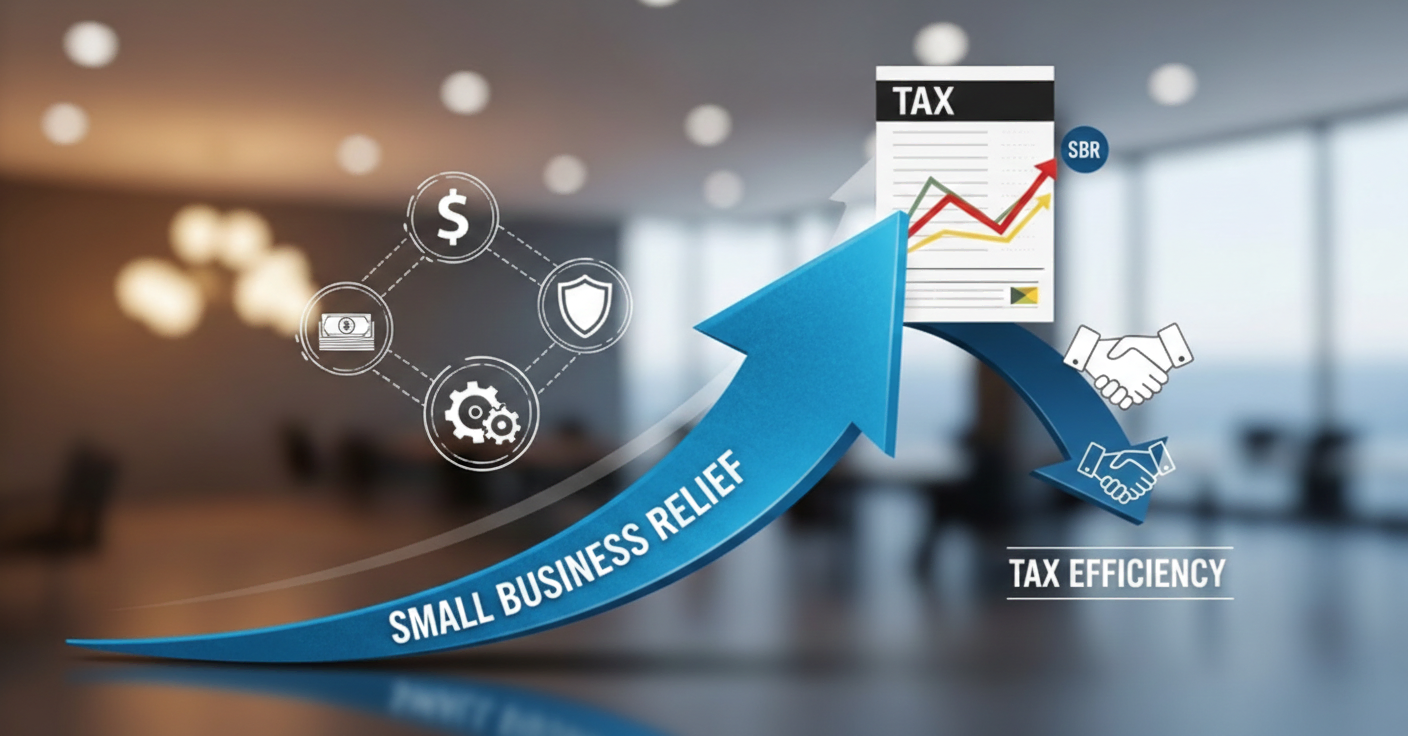
If you are a Small or Medium Enterprise (SME), this is your first line of defense. The Small Business Relief (SBR) scheme is arguably the most powerful tool for eligible businesses, yet it is frequently misunderstood.
The Strategy: If your gross revenue (not profit) is below AED 3 million in a tax period, you can elect to be treated as having zero taxable income.
Why It Matters: This isn’t just a 0% rate; it simplifies your administrative burden significantly. You aren’t required to calculate “Qualifying Income” or deal with complex transfer pricing documentation for that period.
The Critical Caveat: This is an election, not an automatic right. You must tick the box when filing your tax return. If you forget to elect for SBR, you will be taxed under the standard regime. I’ve seen businesses assume it’s automatic and face a 9% bill they didn’t expect.
WARNING
Do NOT Artificially Split Your Business. Some consultants might suggest splitting one business into three separate licenses to keep each under the AED 3M threshold. This is a violation of the General Anti-Abuse Rule (GAAR). If the FTA determines you separated businesses solely to avoid tax, they will consolidate your revenue and penalize you.
Optimizing Owner Compensation: The Salary Strategy
This is the most common question I get: “Can I pay myself a salary to lower my profit?”
The Strategic Answer: Yes, but you must prove you earned it.
Salaries paid to owners are considered a deductible business expense. Dividends, on the other hand, are a distribution of post-tax profit. Mathematically, taking money out as a salary reduces your taxable corporate income, whereas taking it as a dividend does not.
The Critical Rule: The Arm’s Length Principle You cannot simply pay yourself AED 5 million for a role that typically pays AED 500,000. The compensation must be consistent with what an independent third party would be paid for the same service.
Actionable Steps:
- Define Your Role: Are you the CEO, the Head of Sales, or a Silent Partner? (Silent partners cannot claim a salary deduction).
- Benchmark the Market: Keep evidence of salary surveys or job listings for similar roles in the UAE.
- Document It: Have a formal employment contract in place, even if you own 100% of the company.
Navigating Free Zone Qualifying Income Requirements
The myth that “Free Zones are tax-free” is dangerous. The reality is nuanced. Free Zone Persons (FZPs) can enjoy a 0% rate, but only on Qualifying Income.
The Reality Check:
- Income from other Free Zone Persons: Generally qualifies for 0% (if the other party is the beneficial owner).
- Income from Mainland UAE: Generally taxed at 9% (unless it falls under specific qualifying activities like distribution of goods).
- Income from Individuals/Retail: almost always taxed at 9%.
If you are a consultancy in DMCC serving retail clients in Dubai Marina, you are likely paying 9% on that income.
The De Minimis Rule: If your non-qualifying revenue is less than 5% of your total revenue (or AED 5 million, whichever is lower), you might still keep your Qualifying Free Zone Person status. Exceed this threshold, and your entire income even the qualifying part could be tainted and taxed at 9% for five years.
Maximizing Deductible Business Expenses
Many business owners leave money on the table by failing to capture all legitimate expenses. In the rush to file, “grey area” costs are often ignored.
Ensure you are capturing these deductible categories:
- Pre-incorporation Expenses: Did you pay for market research, trade name reservation, or legal advice before your Trade License was issued? These can often be claimed.
- Client Entertainment: You can deduct 50% of expenditure incurred on entertaining customers, shareholders, and business partners (meals, accommodation, etc.).
- Interest Expenditure: Interest on business loans is deductible. However, for larger entities (EBITDA > AED 12M), the net interest deduction is capped at 30% of EBITDA.
- Marketing & Agency Fees: Fully deductible. This includes digital marketing, PR agencies, and even your SEO consultant.
Strategic Tax Grouping and Compliance Elections
If you own multiple trade licenses, looking at them in isolation is a mistake.
Tax Groups: UAE Corporate Tax law allows resident companies with at least 95% common ownership to form a Tax Group.
Why Grouping Wins: Imaging Company A makes a profit of AED 1M, and Company B makes a loss of AED 500k.
- Separately: Company A pays tax on AED 1M. Company B carries forward the loss.
- Grouped: The group’s net taxable income is AED 500k (1M profit – 500k loss). You pay less tax now.
Filing Deadline: Making this election takes time. You essentially treat the group as a single taxable entity, which drastically reduces your administrative paperwork—one return for the whole group.
Ensuring Long-Term Compliance and Mitigating Risk
Strategy is useless if it exposes you to risk. The FTA’s General Anti-Abuse Rule (GAAR) is a broad net designed to catch anyone trying to “game” the system.
If a transaction has no commercial reality and is done only to save tax, the FTA can ignore it.
If an auditor asked you to explain why you split your company or why you paid your spouse a salary, could you provide a commercial reason other than “to pay less tax”? If the answer is no, don’t do it.
A clean audit trail and a robust corporate structure are assets. They increase the valuation of your business and ensure you aren’t looking over your shoulder.
Conclusion
Reducing your UAE business’s tax liability isn’t about hiding. It’s about optimizing. By using Small Business Relief, structuring owner salaries correctly, and understanding your Free Zone status, you can significantly reduce your effective tax rate while staying 100% compliant.
At ebs Chartered Accountants, we help businesses navigate UAE Corporate Tax strategically ensuring compliance, minimizing risk, and implementing smart tax optimization frameworks tailored to your structure.
Disclaimer: This article provides general information and does not constitute financial or legal advice. Tax laws are subject to change. Always consult a qualified tax advisor for your specific business situation.
FAQ
Can I pay my spouse a salary to reduce tax liability?
Yes, provided they actually work in the business and the salary is at “Arm’s Length.” If they manage your HR or accounts and are paid a market rate for that role, it is a deductible expense. If they do no work, it will be disallowed.
Is an audit required to claim Small Business Relief?
Currently, the law does not explicitly mandate an audit solely for claiming SBR if your revenue is below AED 3M. However, you must maintain records that prove your revenue is below the threshold. The FTA can request these at any time.
Is the AED 375,000 allowance applied per visa or per company?
It is applied per Taxable Person (i.e., per company or License). It is not per shareholder or per partner.
What counts as “Qualifying Income” for Free Zones?
It is specific to the nature of the transaction. Income from transactions with other Free Zone Persons usually qualifies. Income from “Qualifying Activities” (like manufacturing, processing, reinsurance, headquarter services) also qualifies. Income from purely domestic retail sales does not.