

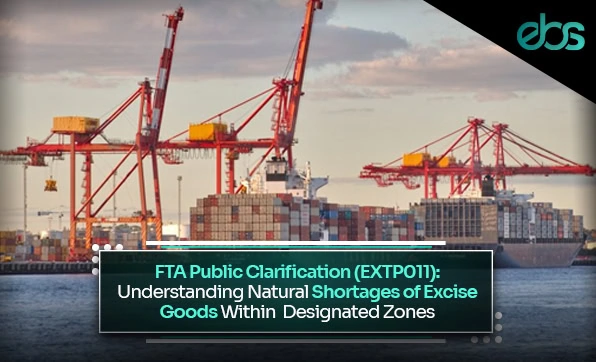
The UAE Federal Tax Authority (FTA) has added an important update for organizations managing excise goods inside Designated Zones (DZs) through Public Clarification EXTP011, effective July 1, 2025. This clarification offers, especially with the natural shortage of excise goods—losses in amount arising from the inherent characteristics of the goods during manufacturing,storage, or transportation inside DZs. It establishes clear rules, procedures, and compliance requirements, supporting organizations to differentiate between acceptable natural shortages and excise goods considered released for consumption and taxability.
What is a Natural Shortage in Excise Goods?
A natural shortage refers to a reduction in excise goods due to unavoidable, inherent elements together with evaporation, absorption, residues in containers, or loss inside manufacturing machinery working normally. Crucially, this shortage should be past the management of the warehouse keeper or taxable person, now no longer on account of negligence, theft, or operational inefficiencies. Examples include moisture loss in tobacco merchandise or minor fuel-evaporation, all going on inside a designated zone.
Public Clarification EXTP011- Overview
Previously, any shortage discovered in DZs was generally taken into consideration for a launch for intake, robotically incurring excise tax liabilities. However, EXTP011 aligned with UAE Cabinet Decision No. 108 of 2023 and FTA Decision No. 6 of 2025 creates an exception acknowledging that natural shortages are now and again inevitable and should not be treated as taxable consumption if properly documented and reported.
Key Requirements and Procedures
Businesses operating inside DZs should adhere to an established framework added by way of means of EXTP011:
- Independent Competent Entity Report: Companies should have interaction with an FTA-approved impartial laboratory (Independent Competent Entity, ICE) to measure and validate the permissible natural shortage percent for their particular excise goods and strategies. This report, based on inspection and evidence, is valid for one-year, and forms the base to claim relief from excise tax for shortages upto the approved threshold.
- Notification and Declaration: The relevant person (warehouse keeper or taxable person) should notify the FTA by way of filing an announcement through the EmaraTax platform. This declaration should reflect the real natural shortage percent and can’t exceed the ICE-approved level. Declarations can cover a couple of tax periods, up to 6 months.
- Record Keeping: Detailed documentation is obligatory to support the natural shortage claim. This consists of production method details, manufacturing formulas, ancient shortage data, gadget specifications, and the ICE’s report. Retaining such facts is important for capacity FTA audits.
- Report Renewal and Operational Changes: If there are giant modifications to the production-line, method, or storage situations that have an effect on the natural shortage percent, organizations should notify the ICE within 20 business days to acquire an updated report. Failure to resume a report yearly or modify it for operational modifications may also bring about denied comfort.
Important Considerations
- Any shortage exceeding the approved natural shortage percent is deemed taxable and should be dealt as a release for consumption, triggering excise tax obligations.
- Losses because of theft, negligence, or operational mistakes do not qualify as natural shortages and should comply with separate reporting and excise tax compliance procedures.
- Natural shortage relief is only granted inside designated zones; organizations outside these zones aren’t eligible for such exemptions
- The pre-approval report from an independent entity is an obligatory prerequisite for filing any natural shortage claim.
Impact on Businesses in UAE
The EXTP011 rationalization introduces a transparent, consistent, and formalized approach to dealing with natural shortages in excise goods. It reduces disputes over unintentional losses while safeguards excise tax sales through third-party verification and strict documentation requirements. Businesses in excise-sensitive sectors together with tobacco, energy-drinks, sweetened beverages, and fuel should carefully align their strategies with EXTP011 to avoid un-expected tax liabilities.
Summary
In summary, the FTA’s Public Clarification EXTP011 is an important replacement designed to pretty much accommodate unavoidable losses in excise goods inside specific areas, balancing regulatory compliance with realistic enterprise realities. Companies are counseled to acquire the approved evaluation report from an independent competent entity, hold rigorous records, and make timely claims of natural shortages through the EmaraTax platform, thereby ensuring complete compliance with the UAE’s excise tax legal guidelines put up on July 1, 2025.
How We can Assist ?
ebs chartered accountants in dubai can assist businesses in navigating the complexities of FTA Public Clarification EXTP011 with the aid of ensuring accurate evaluation and documentation of natural shortages, supporting clients to comply completely with excise tax policies inside Designated Zones. Their professional advisory and compliance services streamline filing declarations at the EmaraTax platform and maintain critical records to avoid unexpected tax liabilities.
FAQs
What is FTA Clarification EXTP011 about?
It addresses how natural shortages of excise goods are handled in Designated Zones.
What are natural shortages in excise goods?
These refer to losses that occur naturally due to factors like evaporation or leakage during storage.
Do businesses need to report natural shortages?
Yes, businesses must notify the FTA and provide evidence to justify the shortage.
Is tax still payable on natural shortages?
Tax may not apply if the FTA accepts the shortage as natural and adequately documented.